
Over the years, the computer club has had a number of locations in which to hold their meetings to help educate members in the different facets of technology. Here is the history of where they met.
Homes-where it all began
In the beginning, members opened up their homes to other members to attend presentations and meeting for the club. This required some setup and tear-down before and after the meeting. And those that attended had to sit around a computer to view what was taking place. But the learning process began and membership increased.
Zerger Hall
In a joint venture between the Licking County Computer Society and the Licking County Aging Program, the LCAP gave the club access to a small classroom where it set up a small computer lab. One of the members at the time donated 10 computers for use as a teaching classroom. It was a small and cramped room, but held many classes covering topics including beginning computers, accessing the Internet, and productivity tools. This was a real plus for the computer club as the classes were held in a busily used building for Senior activities. As Seniors moved around the building going from activities to activities (including a dining room for lunches) they passed the classroom and became aware of the computer club and it’s teaching program. Many signed up for the classes and many joined the club.
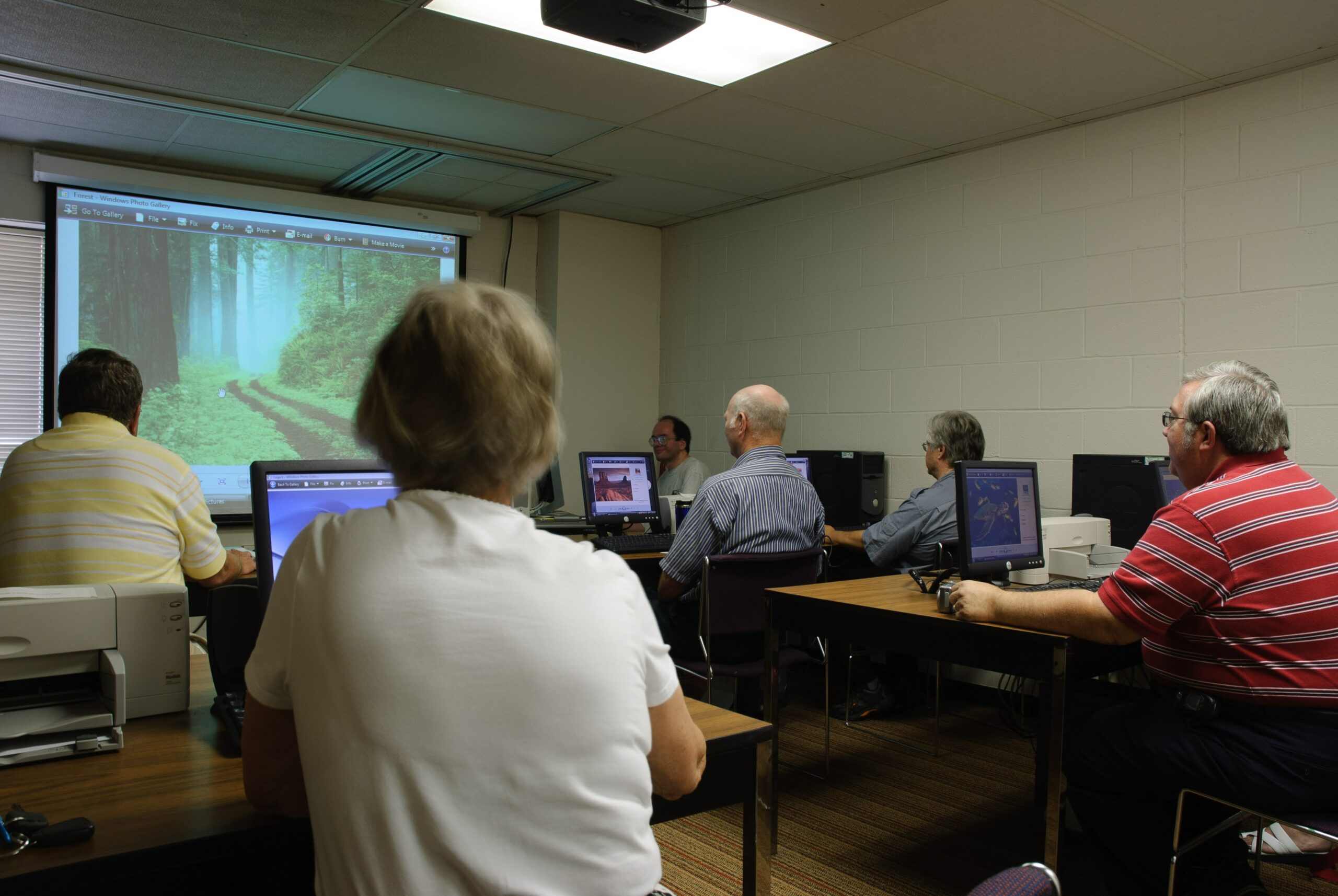
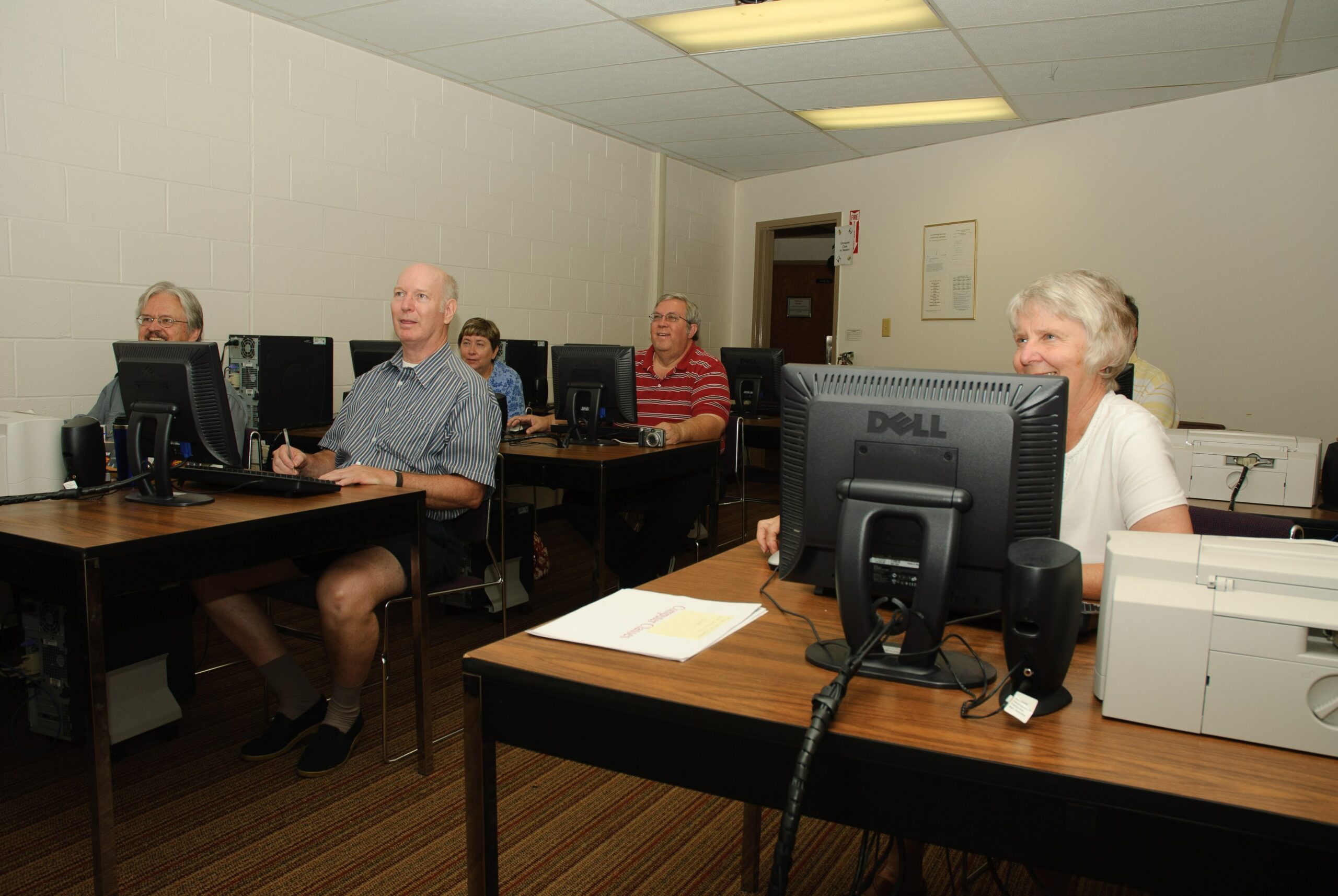
The club also rented out the dining room for it’s monthly meetings which included hooking up a computer to a screen so everyone could easily see what was going on from a comfortable distance. The club also used the facility for annual dinners and other social gatherings.
The other use of the Senior facility revolved around the club’s other “service”, a Repair Center where members could bring in their computers and have a team of club members fix problems, replace bad parts, and do some upgrading to extend the life of the member’s computers. The big problem with this was the “repair guys” had to haul in all their equipment and supplies for each Repair event and then pack it all up and store it somewhere until the next event. But they did it because it provided a big service to their members.
A-Frame
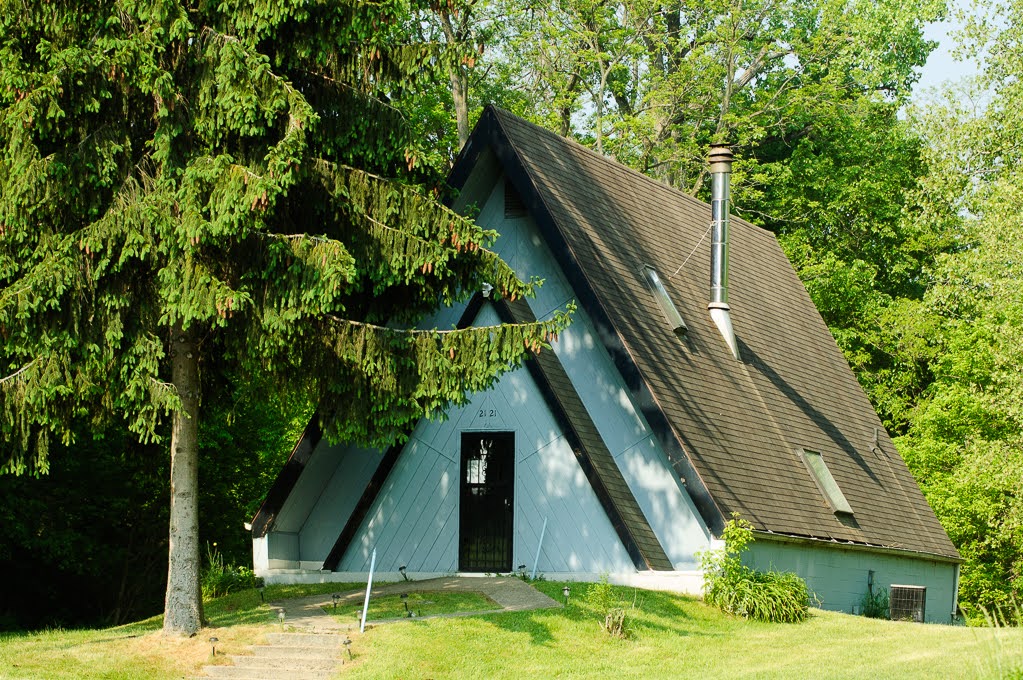 One of the members found out that a local “Foundation” had a piece of property that was in need of a “foster family” to live in the premises and maintain it. The building had an interesting past that include being a cocktail lounge at one time. It was a single room on the main floor that would be great for the club’s repair center where permanent tables/stations could be set up for our “tech docs” to work and help other users. The basement provided a storage space for all the extra parts needed to refurbish computers. And the outside had a small grassy area that would be good for cookouts and small gatherings. Many people brought their computers to be worked on and our techs didn’t have to haul boxes of tools, and parts to our old location. This building even became the home of the first Linux SIG, where they had a table set up with a computer that was running Linux so people could come in and learn about this alternate operating system. They started having their monthly meetings at this location, along with the repair center being open three times each month. Once we moved into the facilities of 123 S. 3rd Street in Newark, the Foundation tore down the building.
Abandoned Heisey Glass Factory
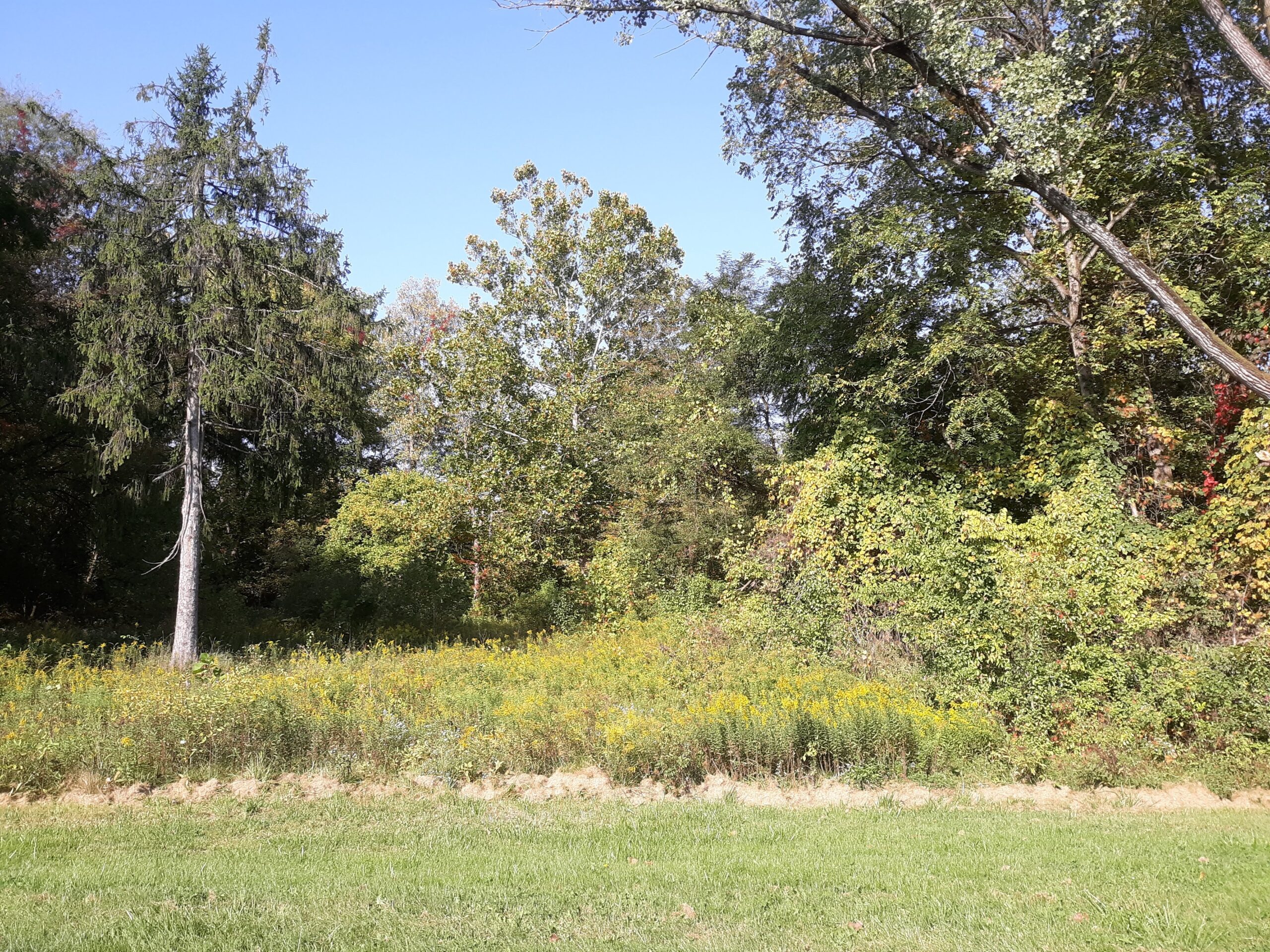
No, we didn’t have meetings in an old factory. But the unused Heisey Glass Factory was the perfect place to hold our bi-annual recycling event. It had easy access to a parking lot for dropping off material that people wanted to donate. Easy access from within the city made it available to anyone. There was a lot of space inside the unused factory to stack the skids of equipment that we couldn’t use until the recycler could bring their big trucks to haul them away.
At the time we had donations from individuals, schools, universities, and businesses. After accepting the donation, we had a team of “evaluators’ that check devices out and see what type of refurbishment it might need. Some computers were still in good working order, the owners just didn’t want them any more. Through this project, many tons of technology equipment was redirected from landfills to recycle centers and into refurbished computers.
Over the years we’ve stopped using the factory because the volume of donated material is less due to many other organizations having their own recycling events, so we didn’t need anything that large.
123 S. 3rd Street-a place we called our own
The Licking County Aging Program was planning on moving into a larger building. The plan also called for the Licking County Computer Society to move along with them to a new computer lab and have their meetings in one of the planned banquet rooms. However, those plans changed when LCAP decided to consolidate their Senior Care facility, located in another building, under the same roof as the rest of their activities. LCAP offered LCCS/ECOTUC the option to rent the other building for all of our services. This was a great opportunity as we “remodeled” the building into two main sections, a new spacious 12 computer teaching lab and SIG meeting place, and a larger area for our meetings and dinners. We also had a nice size room for our repair center and another room for our refurbishing needs. It also provided easy access with one floor and adjacent parking spaces. During this time our technology classes expanded, we added a number of SIGs (Linux, Digital Imaging, and Apple Devices), and membership grew. That was until COVID hit. Then we had to shut down all activities in the building and move whatever we could to “on-line” meetings. After COVID we became a “hybrid” meeting club where we met both in-person and on-line.
Neal Avenue United Methodist Church-current location
The activities of the Licking County Aging Program expanded enough that they canceled the rental agreement for the building at 123 S. 3rd Street because they needed it. So we needed to final a new location. After some quick searching that didn’t give us a lot of options, one of our club members informed us that his church, the Neal Avenue United Methodist Church, had a couple of unused classrooms that they might be willing to rent to us. We entered an agreement with the church and now have converted one of their classrooms into a combined repair center and refurbishing supply store. We use another classroom on a part-time basis for any technology classes and our SIG meetings. Our monthly meetings are held in their Fellowship Hall for in-person attendance and also on-line. As the amount of items from our recycling events have gone down, we now have our yearly events in their side parking lot. This is beneficial as people can see what we are doing as they drive by.